Return to Uzone News Portal


The advancement of technology is the backbone behind the rise and explosive popularity of eSports. This industry has not only taken the world by storm but has also become a multibillion-dollar business with audiences from all over the globe.
However, eSports wasn’t built overnight. The first eSports tournament was actually held back in 1972—just a decade after Spacewar! was created. The event took place at Stanford University’s Artificial Intelligence Laboratory and is widely recognized as the world’s first eSports competition.
Known as the Intergalactic Spacewar Olympics, the event was sponsored by Rolling Stone magazine. Participants competed for the highest score in Spacewar! and the winner received a one-year subscription to Rolling Stone as the grand prize.
When eSports Began to Rise
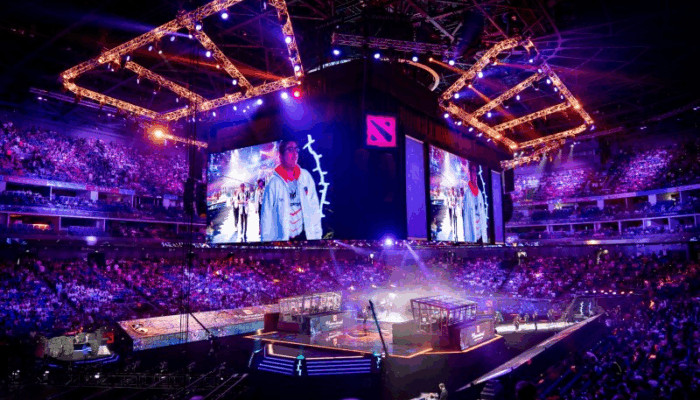
eSports began gaining global popularity in the 2000s, driven by the rise of broadband internet and the spread of online multiplayer games. These developments transformed eSports from small-scale tournaments into large, international events.
Games like StarCraft in South Korea and Counter-Strike in the United States attracted thousands of players and spectators. Professional teams formed, and cash prizes became a standard feature of the competitions.
The 2010s marked the true explosion of eSports. Titles such as League of Legends, Dota 2, and Overwatch played crucial roles in driving this popularity. These games not only offered deep strategy and engaging gameplay but also built massive, loyal fan bases.
The League of Legends World Championship, for instance, has become one of the most-watched eSports events in the world, with millions tuning in to see the best teams compete for the crown.
The Peak of eSports Popularity
The rise of streaming platforms like Twitch, YouTube Gaming, and Facebook Gaming gave fans unprecedented access to their favorite teams and players. The result? eSports truly went global.
By 2019, eSports had become a worldwide phenomenon. The industry hit a major milestone when its total revenue surpassed $1 billion for the first time. Audience numbers also skyrocketed—from 235 million viewers in 2015 to 443 million in 2019—signaling massive global adoption.
This surge in viewership directly boosted revenue through various channels, including sponsorships and advertising, media rights, ticket and merchandise sales, and in-game purchases such as items, skins, and battle passes.
The Role of Technology in eSports Success
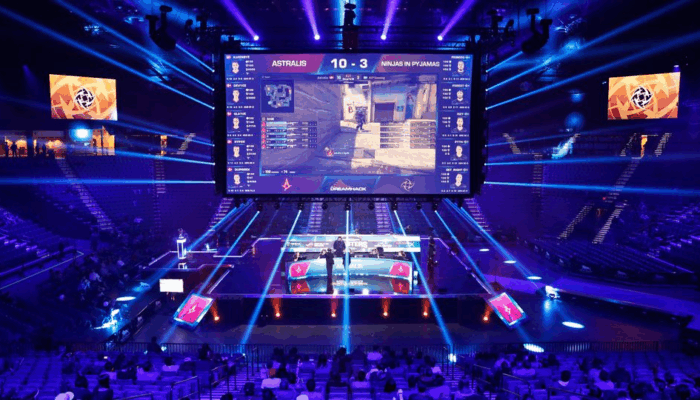
Without rapid technological advancements, eSports as we know it today would not exist. From the start, the industry has relied heavily on increasingly sophisticated PCs and gaming consoles. Better graphics capabilities, faster processors, and larger memory capacities have enabled developers to create more complex, detailed, and engaging games.
In addition, the rise of smartphones—with mobile hardware now rivaling older-generation consoles—has made games like Mobile Legends, PUBG Mobile, and Free Fire accessible to millions of players worldwide, expanding both the player and viewer base for eSports.
High-precision gaming mice, mechanical keyboards, spatial-audio headsets, and high-refresh-rate monitors are all examples of technological innovations that elevate eSports athletes’ performance to the next level.
Strong Infrastructure Enables Healthy Competition
High-speed internet availability has been the key foundation for the rise and growth of complex online multiplayer games—the cornerstone of eSports.
Before the era of fast internet, multiplayer games were limited to local networks (LAN) or slow, unstable dial-up connections, which restricted the scale and competitiveness of online gaming. With the arrival of broadband and more stable, high-speed connections, those barriers disappeared.
Game companies invested heavily in global server infrastructure to ensure smooth gameplay and connectivity, regardless of players’ geographic locations.
Furthermore, modern game engines now allow developers to build realistic virtual worlds. Accurate physics simulations, and stunning visual effects—enhancing both the playing and viewing experience. To maintain competitive integrity, anti-cheat technologies continue to evolve, ensuring fair play in every eSports tournament.