Return to Uzone News Portal

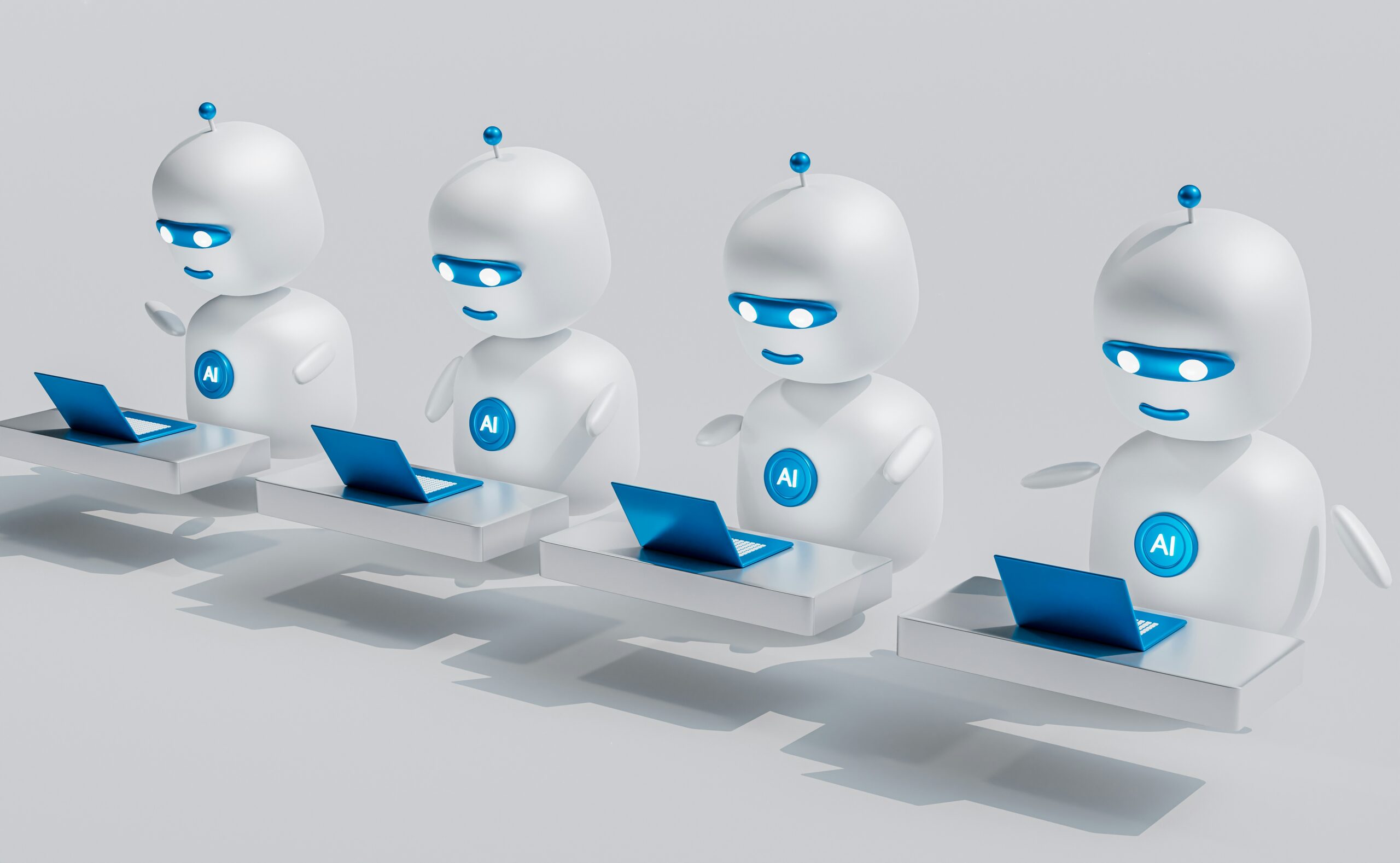
New AI chatbot models continue to emerge. An AI chatbot is a computer program designed to mimic human conversation using Natural Language Processing (NLP).
Through AI chatbots, users can ask questions and the chatbot will formulate the appropriate response. Another advantage is that AI models allow chatbots to keep learning from every user interaction, making their answers increasingly natural over time.
Among the many AI chatbots available, here are the five most widely used ones, based on data released by Market Share.
ChatGPT
The arrival of ChatGPT has pushed other tech companies to create their own AI chatbots. This was the first chatbot to start the AI trend. As of February 2025, ChatGPT had recorded 1.63 billion visits with 180.5 million users.
In general, ChatGPT can be used to help with homework, summarize complex texts, personalize content, and even analyze data. In addition, ChatGPT also uses DALL-E, which enables it to generate images from text prompts.
Another strength is that ChatGPT can be accessed directly without the need to install an app. It can also write, debug, and explain code in multiple programming languages, and provide relevant answers within seconds.
Microsoft Copilot
Originally launched as Bing Chat, Microsoft Copilot may look like a typical AI chatbot, but it has several advantages that set it apart. First, it is built with the latest large language model, giving it high performance in understanding and processing natural language.
Moreover, Microsoft Copilot is integrated with Microsoft products such as Word, Excel, and Teams, helping users boost productivity. And since it is a Microsoft product, it naturally adheres to strict privacy and security standards.
Gemini
Gemini is an AI chatbot developed by Google. It is designed to be a versatile multimodal AI model that can be applied across various platforms, from virtual assistants and search engines to social media.
Its main advantage lies in its ability to understand and generate multiple types of content, including text, images, audio, and video. Gemini was also developed to create a more natural and intuitive user interaction experience.
Similar to Microsoft Copilot, Gemini is integrated with other Google services and products such as Search, Maps, and Assistant, enabling users to solve complex problems, make predictions, and receive deeper explanations.
Perplexity
Perplexity was developed by Perplexity AI, Inc., headquartered in San Francisco, California. Founded by Aravind Srinivas, Johnny Ho, Andy Konwinski, and Denis Yarats, this chatbot was designed to quickly filter information and provide relevant answers.
Key features of Perplexity include real-time information retrieval, citation tracking, and integration with various data sources. Using NLP and machine learning, Perplexity interprets the intent behind user queries and extracts the most relevant information.
To make responses more trustworthy, Perplexity includes citations and sources that users can directly access.
Claude AI
Claude AI uses a Large Language Model (LLM), enabling conversations similar to ChatGPT, Gemini, and Perplexity. Beyond that, Claude AI can read and summarize documents, generate text according to user requests, and even create visual illustrations.
Claude AI offers both free and paid versions. The paid plan starts at $20 per month (around Rp328,576), giving users access to more models such as Claude 3 Opus, along with early access to new features when released.
However, the chatbot—developed by Anthropic—does have some drawbacks. First, Claude AI does not have direct internet access, making it less reliable for providing up-to-date information. In addition, it lacks flexibility in directly processing code.